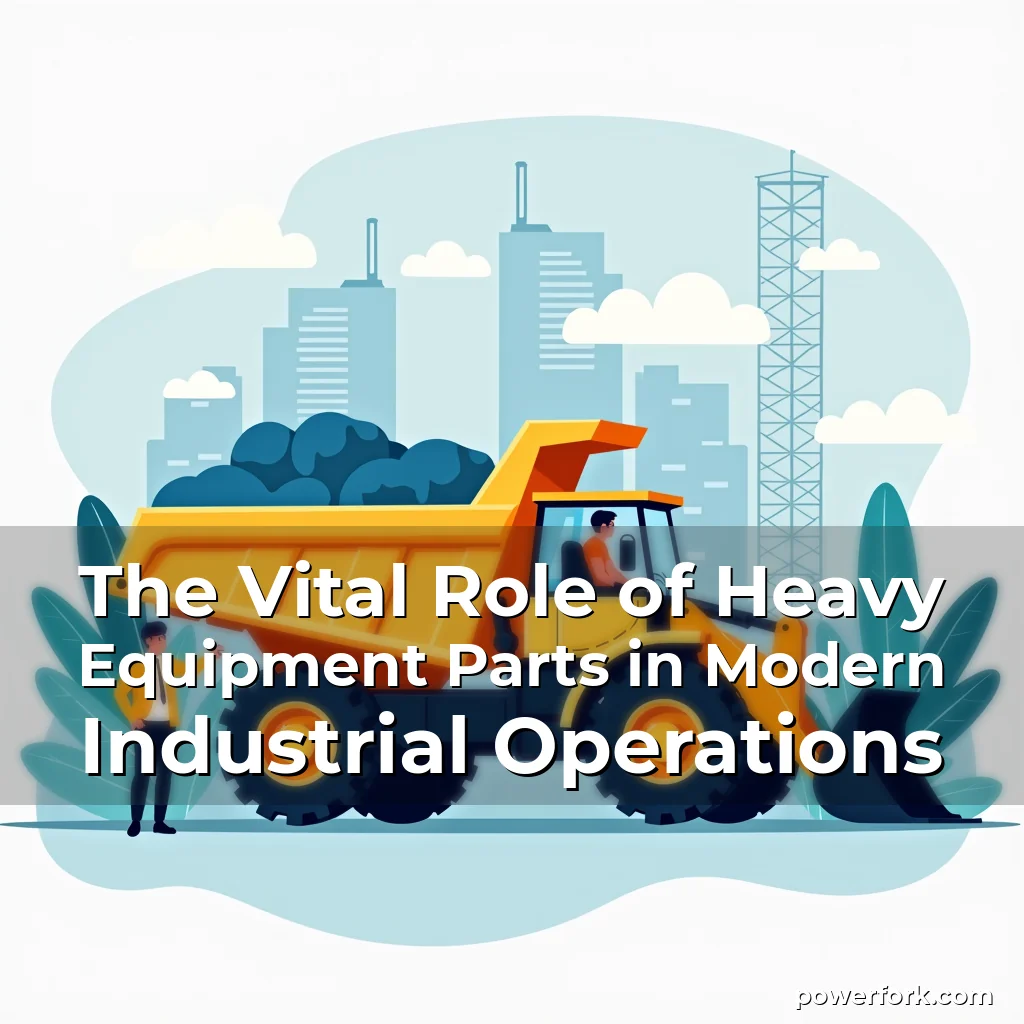
The Vital Role of Heavy Equipment Parts in Modern Industrial Operations
In today’s fast-paced industrial landscape, the efficiency and reliability of construction, mining, and manufacturing operations depend heavily on well-maintained heavy equipment. The intricate network of components that make up these machines is essential for ensuring productivity and safety across various sectors.
Heavy equipment parts form the backbone of modern infrastructure development and resource extraction activities worldwide. From bulldozers to excavators, every piece of machinery relies on precisely engineered components working in harmony to perform complex tasks efficiently.
Understanding the Anatomy of Heavy Machinery Components
Modern heavy equipment consists of numerous specialized parts designed to withstand extreme conditions while maintaining optimal performance levels. These components range from hydraulic systems to engine assemblies, each playing a crucial role in machine functionality.
A typical earthmoving vehicle contains over 10,000 individual parts, many of which require regular inspection and maintenance. This complexity necessitates an understanding of how different components interact within the larger system.
Engine blocks serve as the foundation of any internal combustion engine used in heavy machinery. Constructed from high-strength alloys, they house critical elements such as pistons, valves, and crankshafts that convert fuel energy into mechanical motion.
Hydraulic systems enable precise control over lifting mechanisms through pressurized fluid transmission. These systems consist of pumps, cylinders, valves, and hoses that work together to provide smooth and powerful operation.
Battery packs supply electrical power to start engines and operate auxiliary systems when primary power sources are unavailable. Their durability under harsh environmental conditions makes them vital for continuous operations.
Gearboxes facilitate power transfer between the engine and wheels by adjusting torque output according to workload demands. They contain multiple gears arranged in complex configurations to optimize speed and force distribution.
Tire treads determine traction capabilities on various surfaces, making them essential for off-road applications where stability is paramount. Specialized rubber compounds enhance grip even in challenging terrain conditions.
Cab structures protect operators from external hazards while providing visibility and comfort during extended shifts. Advanced materials ensure both structural integrity and ergonomic design features.
Key Points:
- Each component must meet strict engineering standards to maintain overall machine performance
- Maintenance schedules vary based on usage patterns and environmental factors
- Proper lubrication extends service life significantly
- Regular inspections prevent unexpected failures and costly downtime
Material Science Behind Durable Heavy Equipment Components
The longevity of heavy equipment depends largely on the quality of materials used in its construction. Engineers select metals, polymers, and composites based on their ability to resist wear, corrosion, and fatigue under demanding operating conditions.
Steel remains the most widely used material due to its exceptional strength-to-weight ratio and availability. However, specialized alloys offer improved resistance against abrasion and thermal stress encountered in industrial environments.
Cast iron provides excellent compressive strength but lacks ductility compared to other metal options. It finds common application in gear teeth and bearing housings where impact absorption matters less than load capacity.
Aluminum alloys reduce weight without compromising too much on structural rigidity, making them ideal choices for components requiring frequent movement or exposure to high temperatures.
Polymer-based coatings protect metal surfaces from oxidation while reducing friction between moving parts. These treatments can extend maintenance intervals substantially.
Composite materials combine organic fibers with resin matrices to achieve superior strength characteristics at lower weights than traditional metallic counterparts. They’re increasingly being adopted for non-load-bearing components.
Did you know? A single excavator bucket may weigh several tons depending on size specifications yet still needs to be light enough for efficient handling operations.
Surface treatment techniques like galvanization create protective layers that prevent rust formation on ferrous metals exposed to moisture-laden environments.
Anodizing aluminum enhances its natural oxide layer for better corrosion protection while also improving surface hardness suitable for decorative purposes.
Zinc plating offers cost-effective anti-corrosion benefits for steel components subjected to moderate weathering conditions rather than severe chemical exposure scenarios.
Ceramic coatings applied via thermal spraying methods provide enhanced heat resistance properties beneficial for exhaust manifold components experiencing high temperature fluctuations regularly.
Importance of Regular Maintenance for Heavy Equipment Parts
Preventative maintenance programs play a critical role in extending the lifespan of heavy equipment components. Scheduled inspections help identify potential issues before they escalate into catastrophic failures.
Fluid checks should occur frequently since contaminated oil or low coolant levels can cause premature part degradation and overheating incidents.
Lubricant replacement intervals need careful adherence because insufficient or degraded grease leads to increased friction losses and accelerated component wear rates.
Filter replacements ensure clean air intake for engines and clear hydraulic fluid circulation paths free from particulate matter buildup inside system circuits.
Wear monitoring tools track dimensional changes in key parts over time using laser scanning technology or vibration analysis sensors embedded within the machinery itself.
Visual inspections detect cracks, deformation, or abnormal discolorations indicative of impending failure modes that might not show up immediately through conventional testing means alone.
Operator training emphasizes correct usage procedures that minimize unnecessary strain on vulnerable components susceptible to misuse-induced damage.
Data loggers record operational parameters allowing predictive analytics algorithms to forecast maintenance requirements accurately long before visible signs appear externally.
Best Practices:
- Implement condition-based maintenance instead of purely calendar-driven approaches
- Use OEM-approved replacement parts whenever possible
- Keep thorough records of all servicing activities performed
- Train personnel properly on diagnostic tool utilization techniques
Selecting Quality Replacement Parts for Heavy Equipment
Choosing appropriate replacement parts requires careful consideration of compatibility, durability, and cost-effectiveness factors. Original Equipment Manufacturer (OEM) components guarantee exact fitment and performance consistency with original designs.
Aftermarket alternatives often present more affordable solutions though they may lack some proprietary technologies found exclusively in factory-produced versions. Careful research helps distinguish genuine products from inferior imitations posing hidden risks.
Counterfeit parts pose serious threats to equipment reliability and operator safety. Proper verification processes including serial number validation and supplier credential checks become essential precautions against fraudulent merchandise infiltration.
Compatibility assessments involve checking part numbers cross-referencing databases maintained by industry associations specializing in equipment identification standards compliance verification.
Durability considerations prioritize materials meeting or exceeding minimum specification requirements set forth by relevant regulatory bodies overseeing equipment certification protocols.
Cost-benefit analyses balance initial outlay expenses against expected service lives and maintenance frequency expectations derived from historical performance data comparisons among competing product offerings.
Supplier reputation evaluations consider customer testimonials alongside technical support availability metrics indicating responsiveness levels during crisis situations involving urgent repairs needing immediate attention.
Quality assurance certifications demonstrate rigorous testing regimes undergone by production facilities ensuring consistent adherence to established manufacturing tolerances throughout entire batch runs.
Emerging Trends Shaping the Future of Heavy Equipment Components
The evolution of digital technologies continues transforming how we approach heavy equipment management strategies focusing now more than ever on optimizing asset utilization efficiencies through smart integration solutions.
Internet of Things (IoT) enabled sensors monitor real-time performance indicators transmitting data wirelessly back to centralized command centers facilitating remote diagnostics capabilities previously unimaginable within standard operating frameworks.
Artificial intelligence algorithms analyze vast amounts of collected information identifying subtle pattern variations suggesting early intervention measures potentially averting major breakdown events altogether.
Augmented reality interfaces guide technicians through complex repair sequences overlaying virtual instructions onto physical assets enhancing accuracy while minimizing error-prone manual steps traditionally associated with disassembly procedures.
Additive manufacturing techniques allow rapid prototyping and localized production of customized spare parts eliminating dependency solely upon global supply chain networks prone to disruptions affecting timely restocking efforts.
Electric drive systems represent another significant shift towards greener operations reducing reliance on fossil fuels thereby decreasing emissions profiles aligning better with evolving environmental regulations mandating cleaner industrial practices globally.
Sustainable material innovations incorporate recycled contents within new component fabrications aiming toward circular economy principles promoting resource conservation initiatives across industries adopting eco-conscious business models.
Autonomous operation capabilities integrated directly into core machinery architectures redefine workforce deployment paradigms shifting responsibilities away from direct human interaction towards supervisory roles overseeing fleet-wide coordination functions seamlessly.
Global Supply Chain Dynamics Impacting Heavy Equipment Part Availability
International trade agreements influence pricing structures governing access to raw materials necessary for producing essential heavy equipment components impacting final consumer costs accordingly.
Logistical challenges arise from geopolitical tensions disrupting transportation routes causing delays in delivering critical spares exacerbating downtime concerns especially in geographically isolated project sites.
Economic fluctuations affect currency exchange rates altering import/export cost equations compelling manufacturers to reassess sourcing strategies dynamically responding to market volatility trends observed quarterly basis.
Regional specialization develops wherein certain countries excel at particular component fabrication niches creating interdependent relationships across continents forming complex webs of international cooperation dependent on stable diplomatic relations.
Customs clearance procedures impose additional administrative burdens increasing lead times required for cross-border shipments complicating inventory planning exercises requiring buffer stocks strategically positioned ahead of anticipated demand surges.
Risk mitigation plans include dual-sourcing arrangements establishing backup suppliers capable stepping in quickly during primary vendor unavailability episodes preventing operational standstills detrimental to revenue generation targets.
Just-in-Time delivery methodologies face growing scrutiny amid unpredictable supply chain disturbances prompting reevaluation of stockpile policies balancing capital investment against risk exposure thresholds acceptable per organizational resilience benchmarks established annually.
Digital twin implementations simulate complete supply chains virtually enabling scenario modeling exercises predicting outcomes prior to actual implementation decisions finalized after thorough simulation results review sessions conducted monthly cycles.
Environmental Considerations in Heavy Equipment Component Manufacturing
Sustainability has become a central concern influencing how heavy equipment components get manufactured considering ecological footprints left behind during production phases affecting future generations’ living conditions adversely if not managed responsibly.
Carbon footprint reduction goals drive innovation toward alternative energy sources powering manufacturing plants utilizing renewable electricity grids powered primarily by wind turbines and solar panel arrays installed locally reducing dependence on nonrenewables entirely.
Water consumption optimization projects implement closed-loop recycling systems capturing process water for reuse diminishing freshwater withdrawals supporting local ecosystems thriving nearby industrial zones.
Waste minimization strategies employ lean manufacturing philosophies targeting zero-waste objectives through meticulous waste segregation followed by repurposing initiatives converting scrap materials into useful secondary products avoiding landfill disposal altogether.
Toxic substance elimination mandates phase out hazardous chemicals historically used in coating processes substituting safer biodegradable alternatives compatible with existing production line infrastructures without sacrificing desired end result qualities expected consumers receive consistently.
Energy-efficient machining techniques adopt advanced tooling technologies requiring less input power achieving equivalent outputs while simultaneously lowering utility bills contributing positively toward bottom lines alongside environmental stewardship commitments publicly announced yearly sustainability reports.
Circular economy adoption encourages remanufacturing programs refurbishing old components restoring functionality comparable to newly produced items offering economic advantages coupled with reduced material acquisition needs inherently decreasing planetary resource depletion rates effectively.
Life cycle assessment tools quantify environmental impacts at every stage helping engineers make informed decisions selecting materials and processes yielding lowest overall negative effects achievable within current technological constraints pushing boundaries continuously forward seeking improvements perpetually.
Conclusion
Heavy equipment parts remain indispensable in sustaining global infrastructure development and resource extraction endeavors crucial for modern civilization progress. Their significance cannot be overstated given the sheer scale of operations relying on these robust mechanical systems daily.
By prioritizing quality selection criteria combined with proactive maintenance routines supported by emerging technological advancements, stakeholders can ensure continued operational excellence minimizing unplanned interruptions harming productivity metrics negatively. Embracing sustainable practices further strengthens long-term viability securing prosperous futures aligned with responsible resource management imperatives shaping tomorrow’s industrial landscapes ethically.
“`