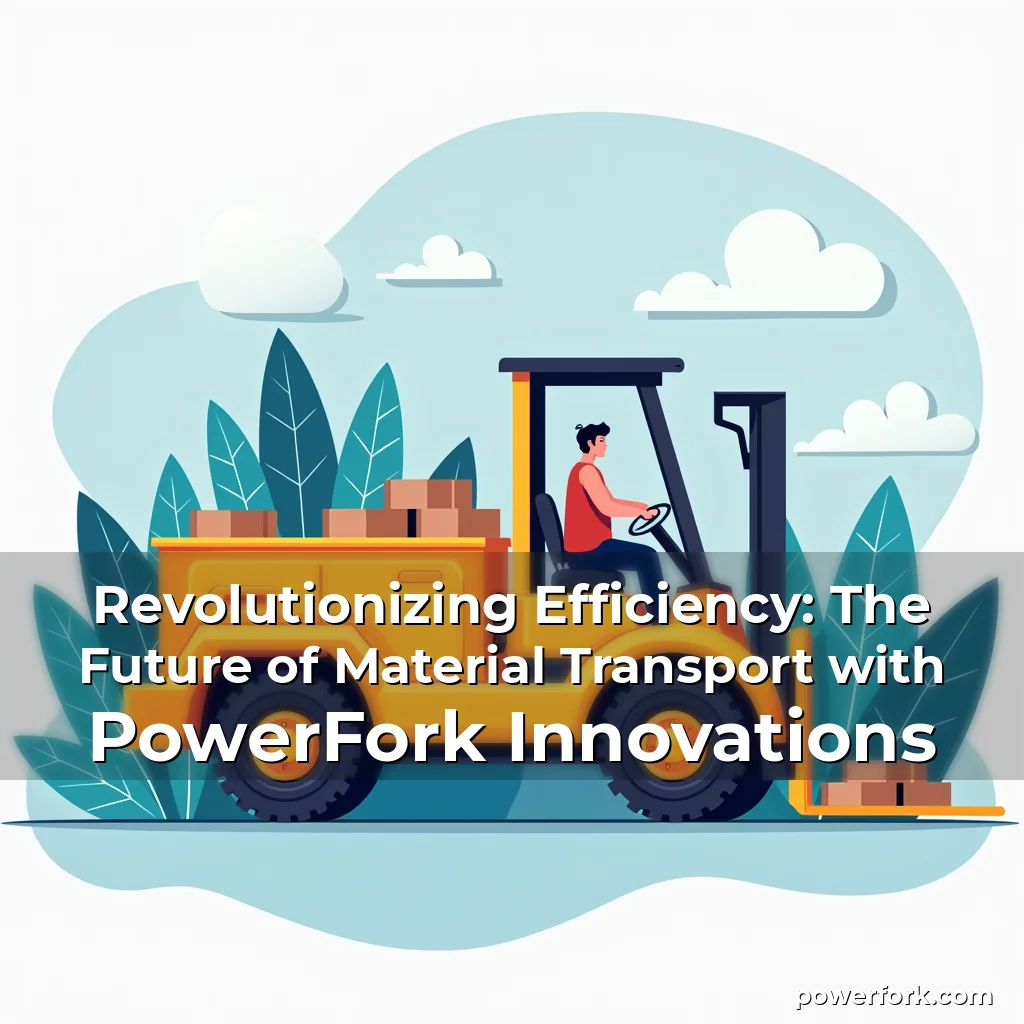
Revolutionizing Efficiency: The Future of Material Transport with PowerFork Innovations
In today’s fast-paced industrial landscape, efficient material transport stands as a cornerstone of operational success across manufacturing, logistics, and construction sectors. As businesses strive for higher productivity and lower costs, innovative solutions like those offered by PowerFork are redefining how materials move seamlessly within facilities.
The evolution of material transport systems has been driven by a relentless pursuit of precision, speed, and adaptability. From manual labor to fully automated conveyors, the journey reflects humanity’s ingenuity in overcoming logistical challenges. PowerFork now leads this charge with cutting-edge technologies tailored to modern demands.
Understanding Modern Material Transport Systems
Material transport encompasses a broad spectrum of methods designed to move goods efficiently from one location to another. Whether it’s transporting raw materials into production lines or moving finished products toward distribution centers, the goal remains consistent: optimizing workflow with minimal downtime.
Traditional approaches relied heavily on manual handling, which often resulted in inefficiencies due to human limitations such as fatigue and inconsistency. Today, advanced systems integrate robotics, IoT sensors, and AI-driven analytics to enhance accuracy and reduce errors significantly.
- Rapid Deployment: Contemporary transport systems can be configured quickly to match changing production schedules and layouts, minimizing setup time and maximizing flexibility.
- Ergonomic Design: Equipment is engineered to minimize physical strain on workers, incorporating intuitive controls and adjustable settings for enhanced usability.
PowerFork Technologies Shaping Tomorrow’s Logistics
At the heart of PowerFork’s innovation lies a commitment to integrating smart technologies that redefine traditional material transport paradigms. Their flagship offerings combine robust mechanical engineering with state-of-the-art digital interfaces to deliver unparalleled performance.
One standout feature is the modular design philosophy employed in PowerFork equipment. This allows components to be swapped out easily depending on specific application needs, whether dealing with delicate electronics or heavy machinery parts.
Pioneering Automation Features
Data reveals that industries adopting automated material transport systems experience up to a 40% increase in throughput compared to conventional setups. PowerFork leverages this insight by embedding autonomous navigation algorithms capable of adapting dynamically to environmental changes.
Furthermore, real-time monitoring capabilities enable predictive maintenance scheduling, reducing unexpected breakdowns by over 60%. This proactive approach minimizes disruptions and extends equipment lifespan considerably.
Safety Enhancements Through Smart Integration
Ensuring worker safety ranks among the top priorities in material transport operations. PowerFork addresses this concern head-on with integrated sensor arrays that detect obstacles and adjust movement paths accordingly, preventing collisions both with personnel and stationary objects.
Beyond immediate collision avoidance, these systems maintain continuous communication networks between devices, creating cohesive ecosystems where each unit operates harmoniously within predefined boundaries established by operators.
Environmental Sustainability in Material Handling
A growing emphasis on eco-friendly practices has pushed companies towards greener alternatives in all facets including transportation. PowerFork contributes positively by developing electric-powered transport units that drastically cut carbon emissions associated with fuel consumption.
Moreover, energy recovery mechanisms embedded within some models convert kinetic motion back into usable electricity during deceleration phases—an ingenious way to recycle otherwise wasted energy sources sustainably.
Cross-Industry Applications of Advanced Transport Solutions
From automotive assembly plants requiring precise component delivery timelines to pharmaceutical warehouses demanding sterile conditions, PowerFork solutions cater comprehensively across diverse fields. Customizable configurations allow seamless adaptation regardless of sector-specific requirements.
An illustrative example includes warehouse environments where high-speed sorting machines work alongside automated guided vehicles (AGVs), streamlining inventory management processes previously plagued by delays caused by manual interventions.
Tackling Challenges in Dynamic Operational Environments
No system exists without its share of hurdles; however, PowerFork proactively identifies common issues facing material transport implementations. One prevalent challenge involves navigating complex facility geometries accurately—a problem addressed via laser-guided positioning systems achieving millimeter-level precision even amidst tight spatial constraints.
Additionally, software platforms accompanying hardware provide dashboards displaying KPI metrics essential for assessing overall effectiveness. Such transparency empowers managers to identify bottlenecks swiftly and implement corrective actions promptly.
Future Trends Influencing Material Transport Evolution
Looking ahead, emerging technologies promise transformative shifts in how we conceptualize material transport. Augmented reality interfaces may soon offer immersive training experiences enabling staff to master new procedures rapidly without disrupting ongoing activities.
Quantum computing holds potential for revolutionizing route optimization calculations currently limited by processing speeds available today. Though still nascent, early trials indicate promising results suggesting broader applicability sooner rather than later.
Case Studies Highlighting Real-World Impact
Several organizations have reported measurable improvements after implementing PowerFork systems. A prominent aerospace manufacturer noted a 35% reduction in loading/unloading times thanks largely to robotic arms equipped with grippers calibrated precisely for fragile composite materials used extensively in aircraft construction.
In contrast, retail giants benefited immensely from RFID-enabled tracking tags affixed onto pallets allowing instantaneous visibility throughout entire supply chains—from supplier docks right down to individual store shelves.
Strategies for Optimizing Existing Infrastructure
For entities seeking gradual upgrades instead of wholesale replacements, strategic retrofitting offers viable pathways forward. Upgrading legacy conveyor belts with smart rollers enhances traceability features without necessitating full system overhauls—an economically prudent choice particularly beneficial small-to-medium enterprises.
Collaborating closely with experienced consultants ensures optimal utilization of existing infrastructure while laying groundwork for scalable expansions aligned with long-term growth objectives.
Preparing Workforce for Technological Advancements
Adopting novel transport methodologies requires corresponding skill development programs aimed at equipping employees adeptly handle sophisticated tools introduced gradually over timeframes permitting adequate acclimatization periods.
Virtual simulation modules simulate typical scenarios encountered daily aiding novices grasp fundamentals safely before transitioning onto live environments thereby mitigating risks inherent initial exposure stages.
Conclusion
As demonstrated throughout this exploration, contemporary material transport systems represent far more than mere mechanized aids—they serve as vital arteries sustaining global commerce through optimized flow patterns achieved via intelligent design principles applied meticulously throughout development cycles.
To unlock untapped potentials residing within your organization’s logistics framework consider exploring PowerFork’s suite of offerings today. By embracing these innovations you position yourself advantageously against increasingly competitive markets striving continuously evolve ever-changing landscapes defined perpetual transformation fueled relentless advancement toward smarter sustainable futures.