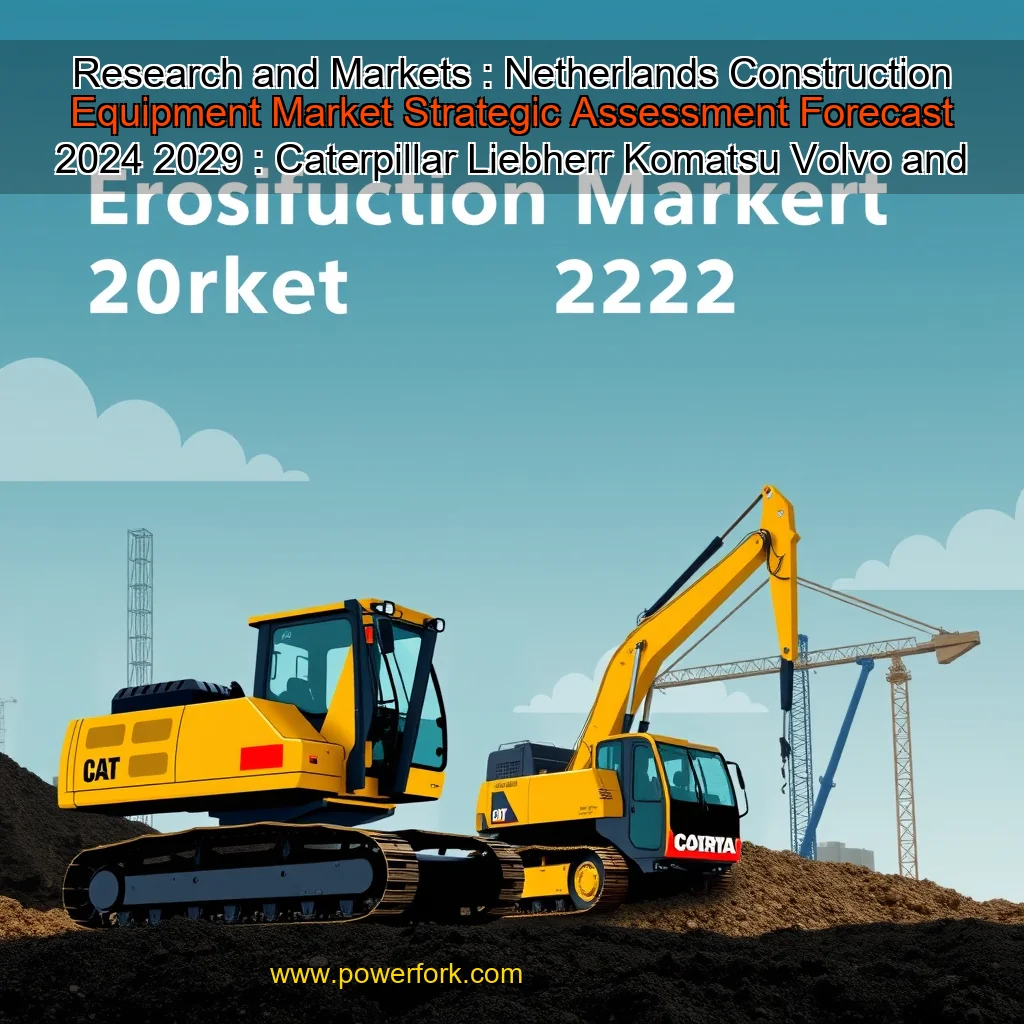
The market is expected to grow at a CAGR of 4.5% from 2023 to 2029.
Introduction
The Netherlands, known for its rich history, vibrant culture, and innovative infrastructure, is also home to a thriving construction equipment market. The country’s strong economy, coupled with its strategic location, makes it an attractive hub for the global construction industry. In this article, we will delve into the current state of the Netherlands Construction Equipment Market, its growth prospects, and the factors driving its expansion.
Market Size and Growth
Total Units Sold
The Netherlands Construction Equipment Market totalled 13,524 units in 2023, with a projected growth to 18,664 units by 2029. This represents a significant increase of 38.5% over the next six years.
Compound Annual Growth Rate (CAGR)
The market is expected to grow at a CAGR of 4.5% from 2023 to 2029. This steady growth rate indicates a stable and expanding market, driven by increasing demand for construction equipment.
Factors Driving Growth
Increasing Infrastructure Development
The Netherlands is investing heavily in infrastructure development, including road construction, bridge building, and public transportation projects. This increased focus on infrastructure development is driving the demand for construction equipment, such as cranes, excavators, and bulldozers.
Growing Construction Industry
The construction industry in the Netherlands is experiencing a surge in growth, driven by government initiatives and private investments.
The Next Generation of Heavy Machinery
Komatsu Europe has taken a significant step forward in the world of heavy machinery with the introduction of its next-generation wheel loaders, the WA475-11 and WA485-11. These machines are designed to provide improved performance, efficiency, and productivity in various applications, including construction, mining, and waste management.
Key Features of the WA475-11 and WA485-11
Develon’s Tunneling Excavator
Develon has also made a significant impact in the heavy machinery market with the introduction of its DX235RTF-7 tunneling excavator. This machine is specifically designed for confined underground environments, where traditional excavators may struggle to operate effectively.
Key Features of the DX235RTF-7
The Netherlands is a leader in wind energy production, driving the demand for earthmoving equipment.
The Netherlands is a leader in wind energy production, and the increasing number of wind farms being built across the crawler, tower, and foundation equipment are driving the demand for earthmoving equipment.
The Dutch Earthmoving Market: A Growing Industry
The Dutch earthmoving market has experienced significant growth in recent years, driven by the country’s investment in public infrastructure renovation and the increasing number of wind power projects. The market is dominated by earthmoving equipment, which accounted for the largest market share in 2023.
Key Drivers of the Dutch Earthmoving Market
The Role of Earthmoving Equipment in the Dutch Market
Earthmoving equipment is the largest segment of the Dutch construction equipment market, accounting for the majority of the market share in 2023. The equipment is used for various purposes, including:
The demand for earthmoving equipment is driven by the need for renovation and construction of public infrastructure, such as roads, bridges, and buildings. The equipment is also used in the wind power industry, where it is used for crawler, tower, and foundation work.
Types of Earthmoving Equipment Used in the Dutch Market
The Impact of Government Initiatives on the Dutch Earthmoving Market
The Dutch government has implemented various initiatives to promote sustainable energy production and reduce greenhouse gas emissions.
The construction industry is expected to experience significant growth in the coming years, driven by increasing demand for housing and infrastructure development.
The Rise of Construction Equipment Utilization
The construction industry is undergoing a significant transformation, driven by the increasing demand for housing and infrastructure development. As the global population continues to grow, the need for new homes and infrastructure projects is on the rise. This has led to a surge in the utilization of construction equipment, with end-users playing a crucial role in driving this trend.
Key Drivers of Construction Equipment Utilization
The Impact of Construction Equipment Utilization
The utilization of construction equipment is having a significant impact on the construction industry.
Introduction
The Netherlands, known for its innovative approach to sustainability, has taken a significant step forward in its efforts to reduce carbon emissions. The government has introduced a subsidy scheme, “Subsidy Scheme Clean and Emission-free Construction Equipment (SSEB)”, aimed at promoting the use of clean and emission-free construction equipment in the country.
The Netherlands aims to become carbon neutral by 2050.
The Netherlands’ Ambitious Carbon Neutrality Goal
The Netherlands has set an ambitious goal to become carbon neutral by 2050. This target is part of the country’s broader efforts to reduce its greenhouse gas emissions and mitigate the impacts of climate change. The Dutch government has implemented various policies and initiatives to support the transition to a low-carbon economy.
Electrification in Construction Equipment
The construction sector is one of the largest consumers of energy in the Netherlands. As a result, the sector is under increasing pressure to reduce its greenhouse gas emissions. To address this challenge, the Dutch government has introduced stricter emission limits for construction equipment. This has led to a significant increase in the adoption of electric and hybrid construction equipment.
Reviving Economic Growth in Impacted Regions Through Road Project Restart.
The Road to Recovery
The government’s decision to allocate funds for the restart of halted road projects is a significant step towards reviving economic growth in regions that have been impacted by the paused projects.
The country has set ambitious targets to reduce greenhouse gas emissions and mitigate climate change.
The Netherlands’ Renewable Energy Revolution
The Netherlands has made significant strides in transitioning to renewable energy sources, with a focus on reducing its reliance on fossil fuels. As of 2023, renewable sources account for 40% of the country’s total electricity production. This shift towards sustainability is driven by the government’s commitment to reducing greenhouse gas emissions and mitigating climate change.
Key Statistics and Trends
The Role of Wind and Solar Energy
Wind and solar energy are two of the most prominent renewable energy sources in the Netherlands. Wind turbines can be found along the country’s coastline, while solar panels are increasingly being installed on rooftops and in solar farms.
Wind Energy in the Netherlands
This target is a significant increase from the previous target of 550,000 new households. The proposed new target is based on the assumption that 75% of the new households will be in urban areas, while 25% will be in rural areas. The proposed housing target is influenced by the need to address the shortage of housing in urban areas, which is exacerbated by the high cost of living in the Netherlands. The government recognizes that the current shortage of housing in urban areas is a major contributor to the high cost of living, particularly for first-time homebuyers. To address this, the government has introduced measures to increase the supply of housing, including the relaxation of building regulations and the provision of funding for developers. These measures are expected to increase the supply of housing in urban areas, which in turn will help to alleviate the shortage of housing. The government also aims to increase the supply of housing in rural areas, which has been historically underserved. The proposed target of 25% of new households in rural areas is seen as a significant step towards addressing the gap in housing supply in these areas. This will help to ensure that rural communities have access to affordable housing options, which will support economic growth and social inclusion.
The Impact of Grid Congestion on Construction Projects
Grid congestion is a significant issue in the Netherlands construction equipment market, affecting various aspects of the industry. The problem arises when the electrical grid is unable to handle the increased demand for power, leading to delays and disruptions in construction projects. This can have far-reaching consequences, including:
Causes of Grid Congestion
The causes of grid congestion in the Netherlands construction equipment market are multifaceted. Some of the key factors contributing to this issue include:
Consequences of Grid Congestion
The consequences of grid congestion in the Netherlands construction equipment market are severe.
These companies have a strong presence in the Netherlands and have been consistently delivering high-quality products and services to their customers.
Market Overview
The Netherlands construction equipment market is expected to grow at a steady rate over the next few years, driven by increasing demand for heavy machinery and equipment.
Netherlands’ construction sector is booming, driven by government investments and infrastructure development.
Introduction
The Netherlands, a country known for its rich history, vibrant culture, and innovative approach to technology, has been making significant strides in the construction industry. The country’s construction sector has been growing steadily, driven by a combination of factors such as government investments, infrastructure development, and a strong demand for housing and commercial spaces. In this report, we will delve into the Netherlands’ construction market, focusing on the segmentation of the earthmoving equipment segment.
Earthmoving Equipment Segment
The earthmoving equipment segment is a crucial component of the Netherlands’ construction industry. This segment includes a range of equipment used for excavation, loading, and hauling of materials.
.
Introduction
The mining industry is a significant sector in the global economy, providing essential resources for various industries such as manufacturing, power generation, and municipal corporations. However, the industry faces numerous challenges, including environmental degradation, safety concerns, and the need for innovative technologies to improve efficiency and reduce costs.
Challenges in the Mining Industry
The mining industry is plagued by several challenges, including:
View source version on businesswire.com: https://www.businesswire.com/news/home/20250129839775/en/ Contacts: ResearchAndMarkets.com Laura Wood, Senior Press Manager press@researchandmarkets.com For E.S.T Office Hours Call 1-917-300-0470 For U.S./ CAN Toll Free Call 1-800-526-8630 For GMT Office Hours Call +353-1-416-8900 © 2025 Business Wire

news is a contributor at PowerFork. We are committed to providing well-researched, accurate, and valuable content to our readers.